📰 Quick Update: This article is sourced from reliable publishers using automation.
In a detailed post on Team-BHP, forum member anurag.somani shared his experience of driving nearly 2,000 km across Maharashtra in an electric vehicle. What began as a well-planned family road trip from Mumbai to Tadoba and back turned into an honest look at the realities of highway EV travel, where the car impressed but the charging ecosystem often tested patience.What was meant to be a smooth Mumbai-Tadoba family drive became a lesson in detours, queues and too many charging apps. The car did its job. The system around it still needs work.It started like most family road trips do. A late evening departure after office. Bags packed. Snacks stocked. One kid already half-asleep before the first signal turned green.The plan sounded simple. Mumbai to Tadoba and back, roughly 2,000 km including a few local runs. A night halt in Aurangabad (Chhatrapati Sambhajinagar) on the way in, and another night stop in Nagpur on the way back. We would do the usual things that make road trips feel safe. Break the drive. Eat at fixed points. Start early-ish. Sleep well.The only twist was that we were doing it in an electric vehicle.I went in confident. Not because I thought everything would be perfect, but because I had planned it the way EV owners are forced to plan. In blocks. In percentages. In charging stops placed around meals.By the end of the trip, I still loved the drive. I just didn’t love what it took to keep it going.
The highway felt built for cruising
The Samruddhi Mahamarg does something rare. It makes long distance driving feel less tiring. Long straight stretches, tunnels and bridges, and the kind of open road that tempts you to switch off your brain. That is also the risk. When the road is that straight for that long, fatigue sneaks up quietly. You need breaks even when you don’t feel like you need breaks.There were moments that made you pause and look out. Rural landscapes, green views after extended monsoons, and animal crossing underpasses and overbridges that made the highway feel a little more thoughtful than the usual “build fast, move on” approach.But this is where the EV reality begins. The expressway itself is a clean run. Your charging stops are not.
The first surprise: Charging is rarely “on” the highway
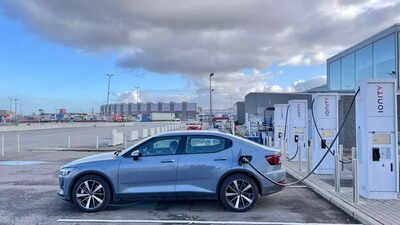
If you are expecting chargers like petrol pumps on an expressway, you will be disappointed.Most fast chargers sit near exits, tucked around food plazas or properties close to the highway. Which means every charging stop becomes a small detour. You get off. You drive inside. You find the charger. You come back out. The time adds up.On our trip, each charging session meant an extra 15 to 20 minutes of detour time, even before the actual charging began.It doesn’t sound like a lot on paper. It feels like a lot at 10 pm with a tired family, when you want the break to be “stop, charge, eat, go”.
The part nobody tells you: The app fatigue is real
Petrol is one payment. Charging is often five.Different networks, different apps, different prepaid wallets. You top up for one charger, and later realise you have money sitting in a wallet you may not use again for months. You reach a station and discover the payment flow is different from what you used last time. You spend more time looking at your phone than you expected to spend on a road trip.By the second day, the process starts feeling less like travel and more like admin work.What you want is simple. A payment system that works everywhere. UPI, card, one flow. What you often get is “download this, load money, try again”.
What planning actually looked like
Before leaving, I mapped charging breaks roughly every 200 km. The logic was basic. We would club charging with dinner, breakfast, lunch, and the night halt. We would not treat charging as a separate activity. It would just become part of the stop.This approach worked well on the way to Tadoba. Most breaks stayed close to the plan. Around 30 minutes to top up to 80% and move on. The drive felt calm because we weren’t pushing it to the edge.The return leg was where the cracks showed.
Away from big cities, options shrink fast
Charging feels abundant near major cities. Move away and the map starts thinning out.At one point, around 250 km from Nagpur, we reached a charger and found four cars already queued up, with only two charging guns. Waiting was an option. So was gambling on the next one. We chose the backup.The backup worked, but it was slower. A 30 kW charger that added around 45 minutes to our stop. Nobody was angry. Nobody was dramatic. But the math was clear. One slow charger can reshape your whole day.That’s the thing about EV travel on highways right now. It’s not one big problem. It’s ten small delays that pile up.
Speed changes everything, and not in a fun way
This is the lesson that hits you the moment you try to “drive normally”.At 120 kmph, range drops fast. On the forward leg, higher speeds meant more frequent charging. On the return, we consciously did longer stretches around 90 kmph, and the difference was obvious. Fewer stops, less stress, and a smoother day overall.You don’t have to drive slow. But you do have to drive with a plan. And that plan changes with your right foot.
The small, practical hack that saved the trip
At Tadoba, we used slow charging at the stay. A simple long extender for the trickle charger, and a 16A socket that most properties have.It’s not glamorous. It’s not fast. But on a long trip, slow charging at night is a quiet superpower. You wake up with more buffer, and your first decision of the day is not “Where do we charge?”
What I learnt, in plain terms
This trip didn’t convert me into an EV evangelist. It didn’t turn me into an EV critic either.It just made one thing clear.The car can handle the highway. The highway ecosystem is still catching up.If you’re planning a similar long drive, here’s what I wish someone had told me upfront:
- Plan stops around people, not percentage. Food and toilets first. Charging second.
- Choose chargers with backup nearby. One broken gun should not ruin your schedule.
- Expect detours off the expressway. Add 15 to 20 minutes per charging stop.
- Keep multiple apps ready, but don’t over-top-up wallets. The leftover balance will irritate you later.
- If you want fewer stops, ease off the speed. The range drop at high speeds is real.
- Slow charging at stays can make the trip. A 16A socket and a safe extension can save hours.
- On long straight highways, don’t get overconfident. Take breaks even when you feel fresh.
We came back with great memories of the drive and the destination. And also with a new habit.Before any long EV trip, I now plan for the road. And then I plan for everything that happens once I leave it.
Source: Times of India
📝 We aim to deliver up-to-date headlines with full publisher credit.