⚡ Auto Brief: This content is part of our real-time syndication stream.
[ad_1]
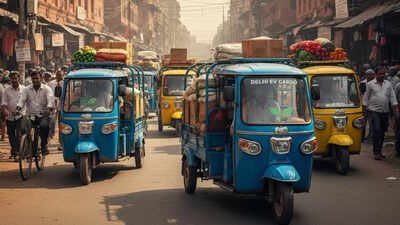
This article is authored by Ayush Lohia, CEO – YOUDHA.India is currently on the verge of a revolution in mobility. Not the kind powered by massive cars or expansive infrastructure, but one that is silently and potently propelled by little electric vehicles. It is becoming more and more obvious that compact, effective, and clever EVs made for urban India will be the foundation of this boom as our nation emerges as the fastest-growing digital and delivery marketplace in the world. Over the past five years, India’s doorstep economy has grown dramatically, producing everything from food to pharmaceuticals, groceries to gadgets. There has never been a greater need for quick, sustainable, and economical travel as e-commerce settlements expand into tier-2, tier-3, and even rural areas. And that’s precisely where compact EVs, particularly electric three-wheelers, are becoming the real game-changers.
Why Small EVs Matter to India’s New Economy
The delivery ecosystem in India functions differently than in places in the West. Streets are narrower, distances are shorter, and demand density is higher. Low operating costs, high uptime, and easy maneuverability are critical to the economics of fleet operators, gig workers, and logistics aggregators. This criterion is ideal for little EVs. They use less energy, lessen reliance on gasoline, and provide drivers with significant monthly savings—often up to 60–70% in operating costs when compared to internal combustion engine vehicles. Increased employment, higher wages, and improved last-mile efficiency are all directly fueled by this cost advantage.However, compact EVs address India’s urban friction, which goes beyond economics. Congestion, pollution, and the disorderly flow of people and products plague cities today. Making the switch to tiny EVs is the only sustainable course of action, not just a wise business move.
The EV–Digital Economy Link
Whether an online order is valued at ₹50 or ₹50,000, it all comes down to effective last-mile transportation. Additionally, mobility has to grow at the same rate as India’s millions of daily deliveries and one billion digital transactions every month. This is the burgeoning New Mobility Economy, in which digital infrastructure and mobility are intricately linked systems rather than distinct sectors.• Demand for mobility is created by digital commerce. • The quality of digital services is determined on mobility efficiency. • Throughout the digital supply chain, sustainable mobility lowers environmental costs. These two worlds are connected by little EVs.
A Once-in-a-Century Opportunity for India
India’s population size, adoption of digital technology, and workforce of entrepreneurs are unmatched by any other nation. Delivery partners, EV fleet owners, and micro-entrepreneurs operating electric rickshaws are just a few examples of how the growth of small EVs is creating previously unheard-of income opportunities at the grassroots level. A single well-made electric three-wheeler can empower:•For a driver to make more money than using a gasoline substitute, • a small fleet operator to create long-lasting microbusinesses; and • a family to achieve steady financial advancement. This is mobility as economic advancement as well as transportation.
Technology at the Heart of Small EV Growth
Adoption of EVs is about creating a new mobility architecture, not simply swapping out an engine for a battery. These days, small EVs have real-time diagnostics, cloud-linked telemetry, Regenerative braking, IoT-based safety and performance monitoring, and effective Li-ion battery solutions. This offers predictability and visibility for logistics firms. It means fewer downtime and dependability for drivers. For India, it entails an integrated ecosystem in which cars “talk” to mobility providers, platforms, warehouses, and charging stations.
Charging Infrastructure: The Next Imperative
For small electric vehicles to properly propel India’s delivery surge, the next wave of innovation must come from charging infrastructure. Instead of big public charging stations for cars, India requires tiny charging terminals in markets. • Quick battery switching kiosks, cluster-based charging for fleet operators, and normal workplace/home charging options. This infrastructure will increase fleet productivity and lower operators’ cost-per-kilometre. As an industry, we must work together to urgently construct this backbone.
A Cleaner, Quieter, More Efficient India
Small EVs are not just an economic solution — they are a climate and public health solution. Every electric three-wheeler replacing a diesel auto reduces tailpipe emissions to zero and improves air quality in our most crowded cities. Noise levels drop, creating calmer neighbourhoods. Energy dependence shrinks, strengthening national efficiency.Urban India can transform within a decade, not through megaprojects, but through millions of small EVs quietly rewriting everyday mobility.Disclaimer: Views and opinions expressed in this article are solely those of the original author and do not represent any of The Times Group or its employees.
[ad_2]
Source link
Source: Times of India
📝 We aim to deliver up-to-date headlines with full publisher credit.