⚡ Auto Brief: This content is part of our real-time syndication stream.
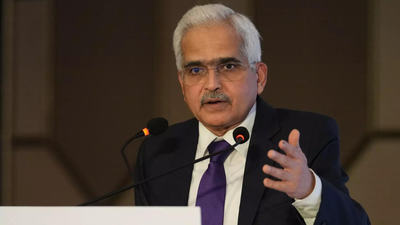
MUMBAI: Former RBI governor Shaktikanta Das said that in the next decade, the Indian economy will be determining the shape of global growth.“The coming decade will not be one where India simply participates in global growth, but one where India shapes it,” he said, framing macroeconomic stability and inflation control as compatible with sustained high growth.Delivering the keynote address at the Business Today Banking & Economy Summit, Das, who is currently principle secretary 2 to the prime minister, set out a forward-looking roadmap for India, arguing that the country is moving from recovery to global influence.On fiscal policy, Das signalled continued consolidation alongside elevated public investment. India has moved down its fiscal glide path from the pandemic peak, with central government debt targeted to decline towards 50 (±1) per cent of GDP by 2031. At the same time, capital expenditure has risen sharply. The approach, he suggested, reflects a model where consolidation does not come at the expense of growth.Trade policy, he said, has undergone a structural shift. Recent agreements mark a “paradigm shift” in India’s external engagement, positioning the country in the “central circle of global trade.” Negotiating from what he described as a position of strength, India is expanding its footprint through FTAs even as global trade conditions remain uncertain.Technology and digital public infrastructure form another pillar of the forward strategy. Das spoke of “India Stack 2.0” as “a more nuanced, intelligent, AI-driven and globally scalable evolution,” indicating a move towards sovereign AI capacity and AI-enabled public platforms that extend beyond payments into credit, commerce and governance.On energy, he said ambition has moved into execution. With 50% of installed electricity capacity already from non-fossil fuel sources, India is targeting 5 million metric tonnes of green hydrogen annually by 2030. The transition, he argued, is now about competitiveness and resilience, not just climate commitments.The call to action was directed at policymakers, financial institutions, industry leaders and investors. “A ‘Developed India’ – Viksit Bharat – is not just a destination on a calendar; it is a commitment we make today for our future generation,” he said. He sharpened the message with a balancing metaphor: “We have to run a ‘marathon and a sprint simultaneously’, maintaining macroeconomic and financial sector stability while aggressively expanding the new frontiers of growth,” said Das.Even as he listed domestic strengths, Das flagged external risks. The global economy, he said, is navigating “persistent geopolitical fragmentation, supply-chain realignments and uneven economic momentum,” with risks “firmly tilted to the downside.” Elevated public debt and widening fiscal deficits in major economies could tighten global financial conditions, increasing capital-flow volatility for emerging markets.He also recalled India’s earlier vulnerabilities, noting that the country had grappled with a “twin balance sheet” problem of stressed banks and over-leveraged corporates. The turnaround since then, he said, has transformed the financial system into “a fluid and dynamic engine of growth,” supported by stronger bank balance sheets, deleveraged corporates and households that remain net financial asset holders.According to Das the growth opportunities lie in deeper trade integration, AI-led productivity gains and a manufacturing resurgence spanning electronics, semiconductors, defence and green energy. The expansion of digital public infrastructure and retail participation in capital markets adds to domestic financial depth.
Source: Times of India
📝 All news content is syndicated with source attribution for transparency.