📰 Quick Update: This article is sourced from reliable publishers using automation.
[ad_1]
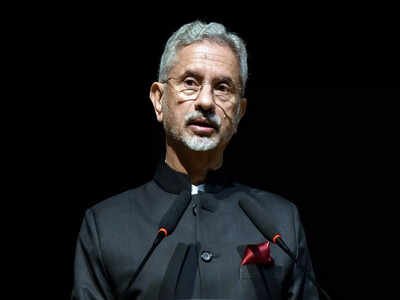
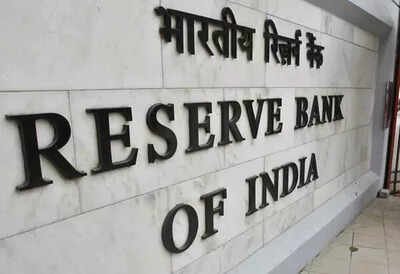
MUMBAI: The Reserve Bank of India on Thursday kept the policy repo rate unchanged at 5.25%, with the Monetary Policy Committee (MPC) voting unanimously to maintain status quo while modestly revising up its near-term growth and inflation forecasts.Following the decision, the standing deposit facility rate remains at 5%, while the marginal standing facility rate and the bank rate stay at 5.5%. The MPC also retained its neutral stance.Explaining the decision, the RBI governor said external headwinds have intensified since the last policy meeting, driven by geopolitical frictions and rising trade tensions. However, he noted that domestic macroeconomic conditions remain supportive. “The MPC was of the view that the current policy rate is appropriate and accordingly voted to continue with the existing policy rate,” he said.On growth, the RBI raised its projections for the first half of the next financial year. Real GDP growth for 2025–26 remains unchanged at 7.4%. For 2026–27, growth in the April–June quarter is now projected at 6.9%, up 20 basis points from the earlier estimate of 6.7%, while growth in the July–September quarter has been revised up by 20 basis points to 7%. The central bank deferred its full-year growth forecast for 2026–27 to the April policy review, citing the upcoming release of a new GDP series.RBI governor Sanjay Malhotra said the Indian economy continues on a “steadily improving trajectory”, supported by private consumption and fixed investment despite a challenging global environment. He added that high capacity utilisation, improving corporate performance and continued emphasis on infrastructure spending should support investment activity.Inflation forecasts were also nudged up for the first half of the next financial year. CPI inflation for 2025–26 is now projected at 2.1%, with inflation in the March quarter pegged at 3.2%. For 2026–27, inflation in Q1 has been revised up by 10 basis points to 4%, while Q2 inflation has been raised by 20 basis points to 4.2%. The governor attributed the upward revision largely to higher prices of precious metals, noting that underlying inflation pressures remain muted.He cautioned, however, that geopolitical uncertainty, volatility in energy prices and adverse weather events pose upside risks to inflation. He also flagged unfavourable base effects from the sharp decline in prices in Q4 of 2024–25, which are expected to push up year-on-year inflation in the final quarter of the current year.On the external front, the RBI said India’s merchandise exports grew 1.9% year-on-year in Q3 of 2025–26, while imports rose 7.9%, leading to a widening trade deficit. The governor said robust services exports and inward remittances should keep the current account deficit moderate and sustainable.He added that the recently concluded India–EU free trade agreement and a prospective India–US trade deal, along with other trade pacts, are expected to support exports over the medium term and integrate India more deeply into global value chains.Capital flows remained mixed, with foreign portfolio investors recording net outflows of $5.8 billion till February 3, even as foreign direct investment inflows stayed robust. India’s foreign exchange reserves stood at $723.8 billion as on January 30, providing import cover of over 11 months.On liquidity, the governor said the RBI had undertaken further durable liquidity-augmenting measures in January and February in response to the cumulative 125 basis points cut in the repo rate so far, and would remain proactive to ensure adequate liquidity and smooth transmission of monetary policy.
[ad_2]
Source link
Source: Times of India
📝 We aim to deliver up-to-date headlines with full publisher credit.