⚡ Auto Brief: This content is part of our real-time syndication stream.
[ad_1]
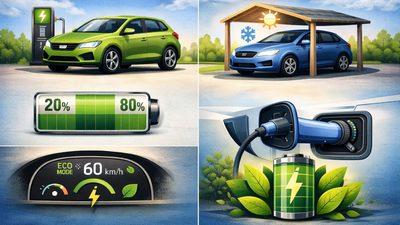
Electric vehicle adoption is accelerating across India, with rising sales driven by better charging infrastructure, a broader range of models and growing consumer confidence. EVs are increasingly being used as daily commuters and family vehicles in both major cities and smaller towns. As more buyers enter the segment, battery health has emerged as a primary concern, as it remains the most expensive component of an electric vehicle. Proper maintenance plays a key role in preserving driving range, performance and long-term ownership costs. Simple, everyday practices can help extend battery life across EVs, whether scooters, hatchbacks or SUVs, offering owners a more reliable and cost-effective ownership experience. Habits that protect your EV batteryExposure to extreme heat or cold can disrupt battery chemistry and significantly affect range. If you live in one of India’s colder regions, preconditioning the vehicle can help improve range while reducing strain on the battery. Parking inside a garage or shaded areas can also limit temperature-related stress. Driving behaviour also plays a role in battery longevity. Frequent hard acceleration and sudden braking place additional demand on the battery, causing short bursts of high power draw that can accelerate wear over time. Such driving can also increase heat generation, which further impacts efficiency and durability. Smoother acceleration and braking help reduce stress on the battery and contribute to better long-term performance.
Charging practicesAvoid charging an electric vehicle battery to 100 per cent on a regular basis, as maintaining charge levels between 20 per cent and 80 per cent is considered optimal for long-term battery health. Full charges place added stress on lithium-ion cells, while deep discharges below 20 per cent can also accelerate degradation by triggering chemical reactions that gradually reduce the battery’s capacity and ability to retain charge.Avoid parking your EV for long periodsRange anxiety has led some EV owners to limit usage to short trips or infrequent driving, but extended periods of inactivity can affect battery health. Leaving an electric vehicle unused for long durations may result in gradual self-discharge and reduced battery efficiency. If you plan to leave your EV parked for an extended period, it is advisable to monitor the battery level regularly and recharge it periodically.Avoid DC fast charging While DC fast charging offers convenience for time-pressed users, frequent use can increase heat and stress on the battery because it delivers power directly to the cells. It’s generally advised to limit fast charging and rely more on 7.2kW AC chargers, which use alternating current from the grid and charge the battery at a slower, more controlled rate, typically over several hours. Most EV manufacturers offer battery warranties ranging from eight to 15 years, sometimes even marketing them as “lifetime” coverage, with limits of up to 1.2 lakh kilometres. However, warranty protection applies only if the battery fails within the specified period and the vehicle has been maintained and charged in line with the manufacturer’s guidelines.
[ad_2]
Source link
Source: Times of India
📝 We use smart aggregation to bring you top news in real-time.